
SOCAMM: Yet Another Framework on the Memory Horizon
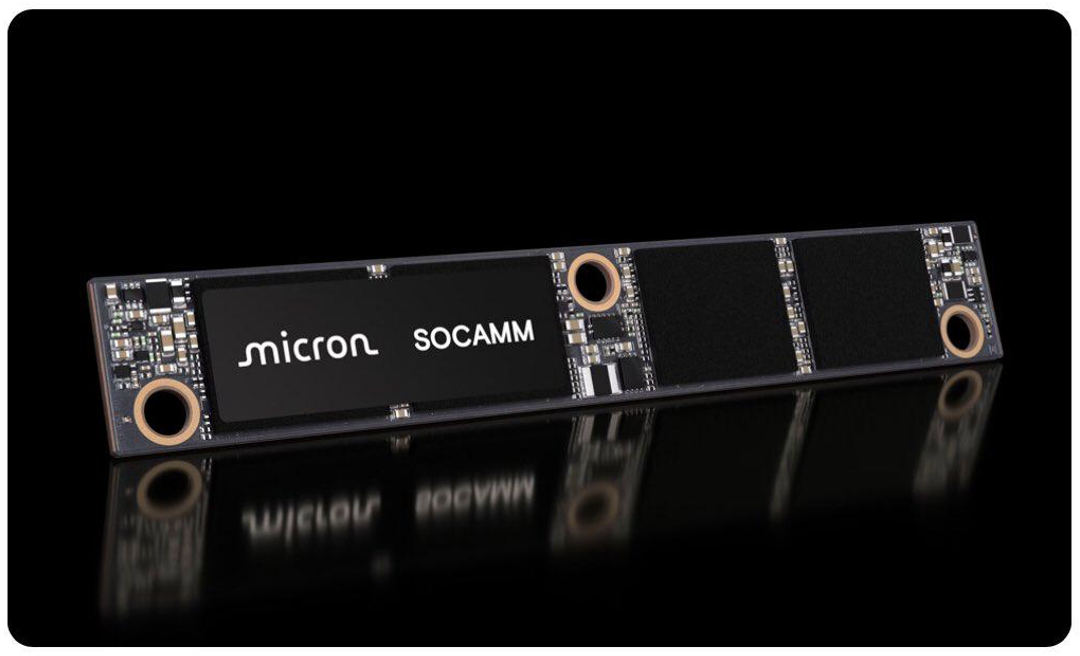
The AI era has spawned many new memory frameworks. The memory companies and memory professionals have much to keep pace with. Interestingly, however, none of the memory solutions has completely resolved the memory wall and associated challenges. Introduced in 2019, Compute Express Link (CXL) is chugging along, though past few months have seen some notable strides. HBM became talk of the AI Infra world, and not to overlook, the cascading effects it had on the global RAM supplies, which, as per reports, will take a few years to stabilize. In my last article, I wrote about High Bandwidth Flash (HBF), which is an attempt to take the best of the Flash world and existing HBM architecture to come up with something that satiates the ever-increasing need of high bandwidth, high capacity, and low latency memory.
As a reminder, fast, high capacity, and low latency memory is required so that an end-user or an AI agent can generate a quick-enough outcome. And for it to be understood by a layman, the outcome generation process isn’t as simple as a Google search.
But there are very few laymen out here, so let’s dive into the technical world of memory. I’ll talk about SOCAMM today.
SOCAMM stands for Small Outline Compression Attached Memory Module. If my sources of information are adequate, this memory framework came into limelight at Nvidia’s GTC conference 2025. NVIDIA envisaged this memory framework along with the three memory giants, Micron, Samsung, and SK hynix.
Features and USP
The SOCAMM memory leverages the LPDDR5X memory, which, as the name states, is a Low Power memory. However, LPDDR is a soldered-down memory leaving no room for repair and field-replaceability; thereby increasing the total cost of ownership. (TCO) SOCAMM is a screws-secured, socketed memory; is modular, and offers the following additional advantages:
Performance: Delivers more than twice the bandwidth of traditional RDIMMs.
Power Consumption: Consumes over 55% less power than RDIMMs.
Thermal Management: Facilitates easier cooling and is compatible with both air cooling and liquid cooling systems.
Compact Size: At just 14x90mm, SOCAMM memory is a third of the size of standard RDIMM module aiding in more efficient space utilization and heat dissipation.
Higher Input and Output Pin Count: SOCAMM memory features 694 input and output pins as compared to 262 pins in traditional RAM modules. This allows for more efficient data transfer.
At the time of writing this article, Micron ships the SOCAMM modules with a capacity of 256GB capacity per module.
Smaller form factor, superior performance, lesser power consumption, and efficient thermal management sets this memory apart.
Use Case
SOCAMM memory is better suited for compact AI workstations, and edge AI applications where compact size, modularity, performance, energy efficiency, and field serviceability (without replacing the entire PCB) become imperatives.
Edge inference applications here range from autonomous machines and industrial AI controllers to smart retail systems and compact inference clusters.
SOCAMM memory also is an apt candidate for chiplet-based and AI-native architectures.
Ecosystem Players
With Nvidia as the pioneer, major manufacturers like Micron, Samsung, and SK hynix are active participants in SOCAMM manufacturing efforts with recent announcements of rollouts and plans for rollout.
On the adoption front, it is not just Nvidia, but also Qualcomm and AMD that have recently announced plans to adopt SOCAMM2 memory in AI products.
A Note on Standardization
Version 1.00 for JEDEC standardization (JESD328) of SOCAMM2, for defining the electrical and mechanical requirements has been made available on the JEDEC site for making the SOCAMM memory technical and commercially viable for long-term platform adoption.
